
From the Master Arborist’s Playbook: Branch Collars = Branch Stubs
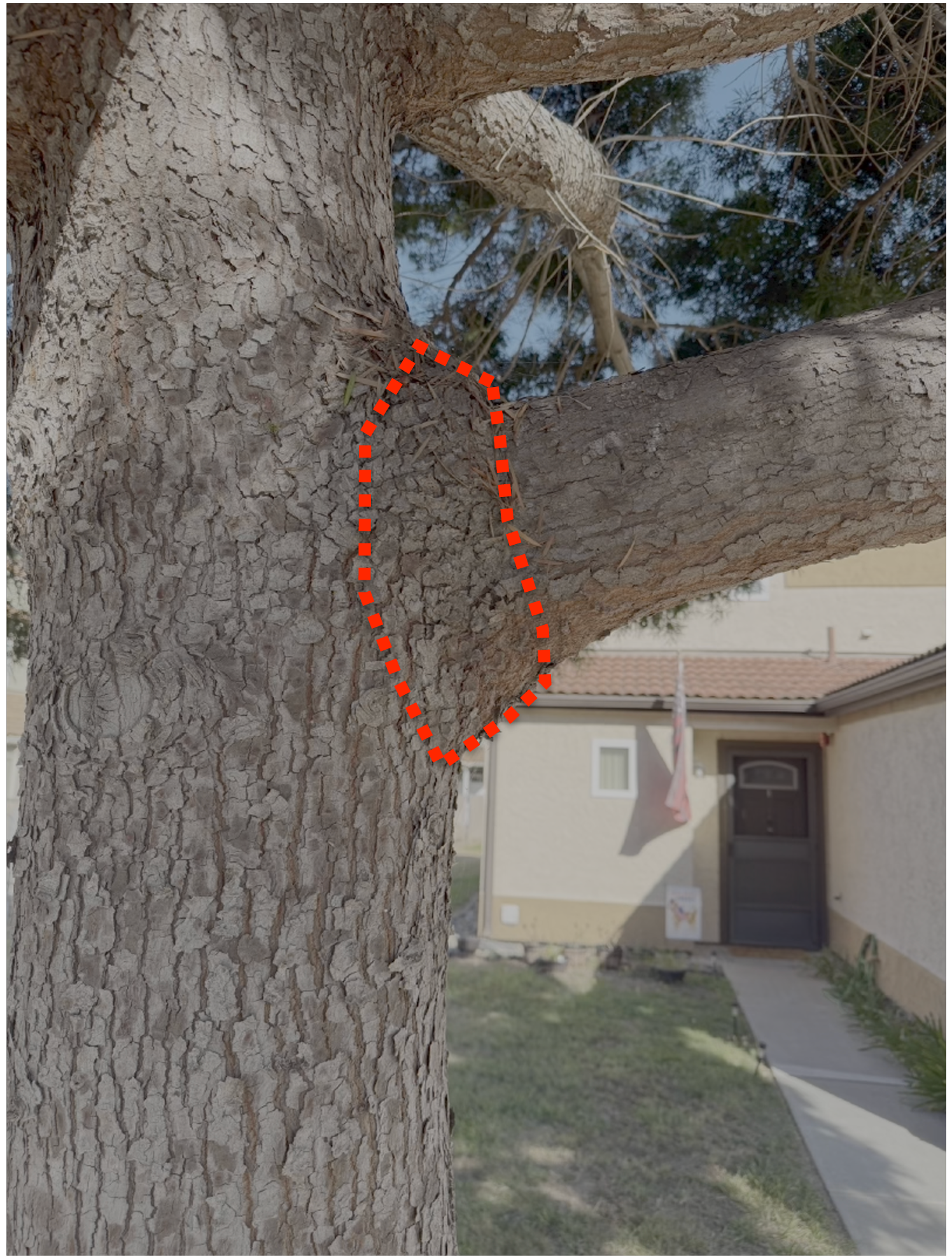
A branch collar is the swollen portion between a branch and the trunk. The red-dotted line in the photo below encompasses the collar of a fern pine (Afrocarpus falcatus).
Branch collars contain specialized cells that function to seal off wounds and prevent decay from entering the vascular system. In the photo below the collar was cut into on the top-side, and damaged on the bottom-side as the branch tore off mid-cut.
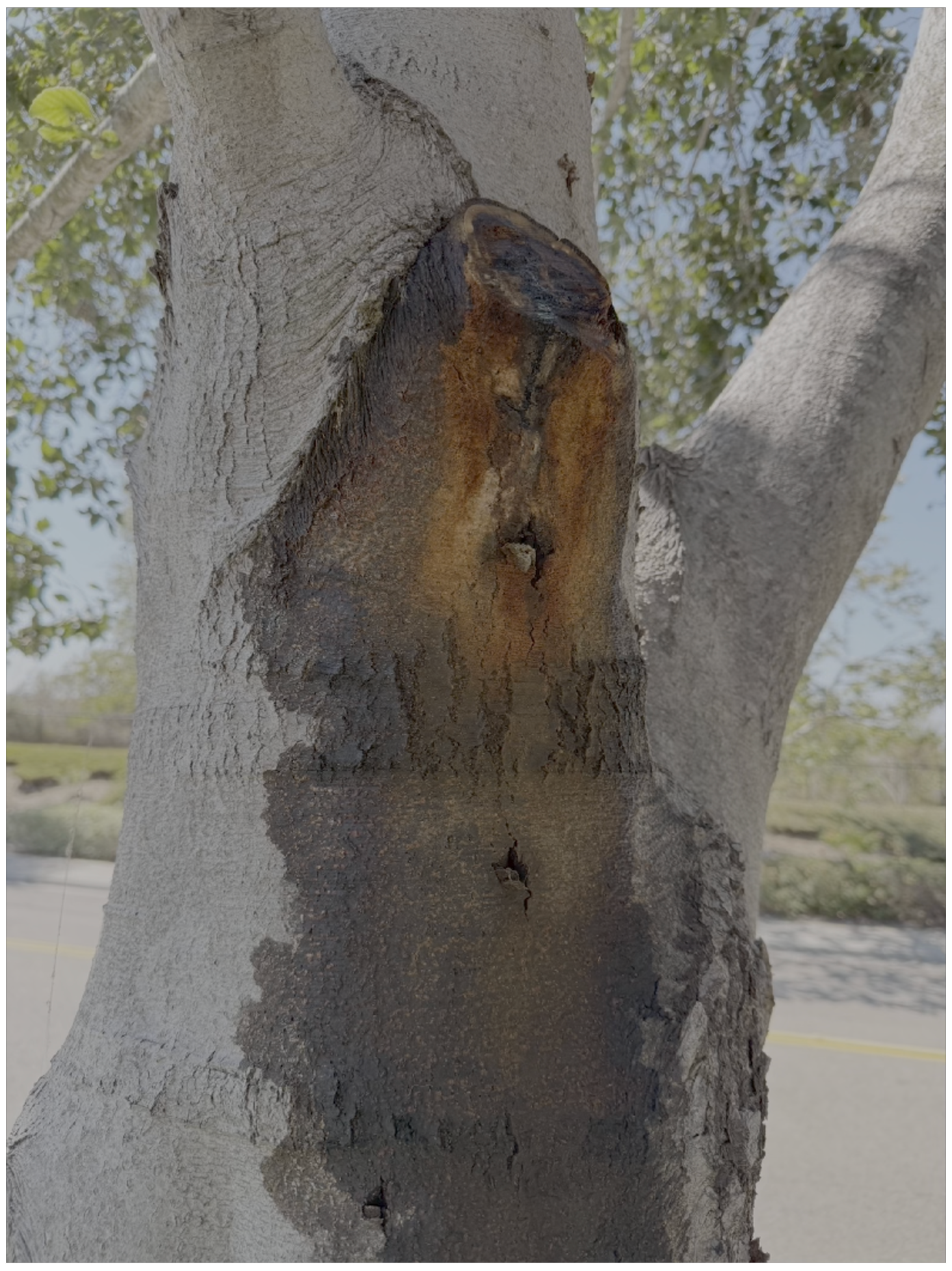
Decay and discoloration subsequently set in.
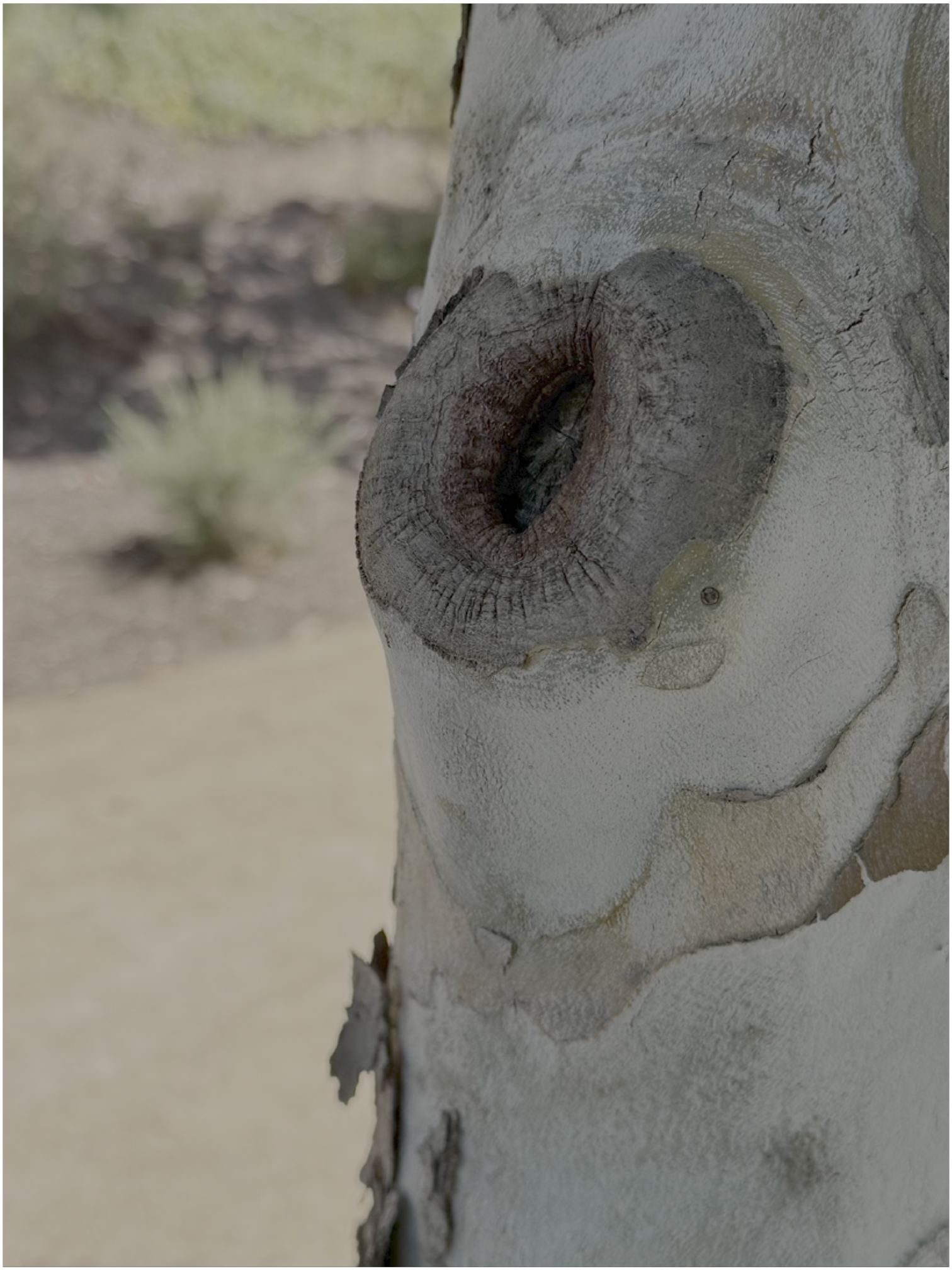
Pruning cuts must be made outside the collar for the wound to “heal” correctly. Basically, the collar protects the trunk (or parent limb) from further injury by forming what looks like a donut with a hole that closes little by little each year. The photo below shows an old pruning wound that is in the process of closing up. There is not discoloration and the decay has been compartmentalized.
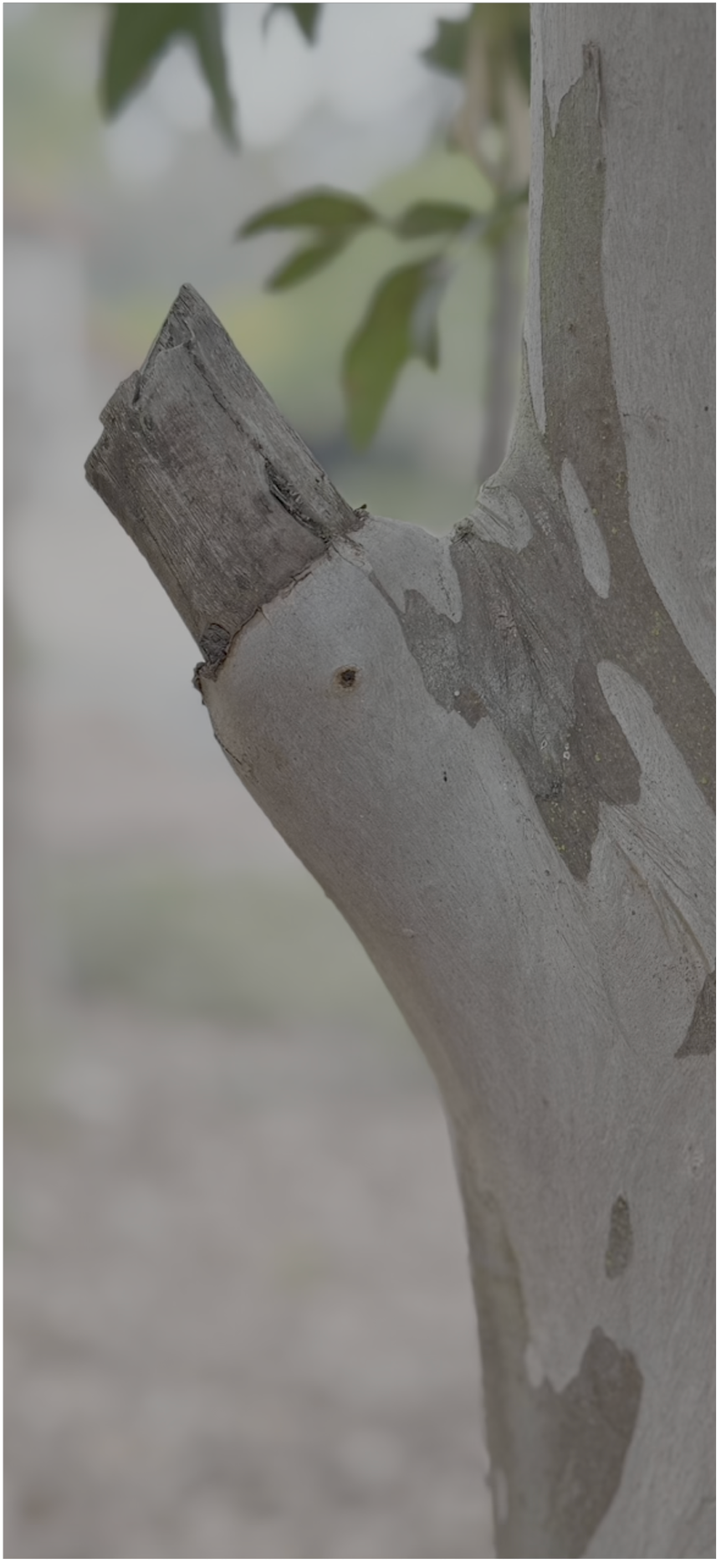
The left photo to the left shows a Eucalypt branch collar that occluded an injured branch. The pruning cut was made after the collar functioned normally.
Though collars are not always noticeable, they’re generally present in most unions. That is, the small branches of a large limb also have collars, even if they are not visually obvious.
Pruning cuts should always stay outside the collar of any union for the protective features to function normally. Unfortunately, it’s a common practice for tree service providers to make pruning cuts that are flush with a trunk or limb, thereby cutting into the collar and preventing the protective feature. The reasons for flush cuts are that “stubs” are unsightly and the client doesn’t want them.
To make matters worse, current ISA standards seem to suggest that stubs are not acceptable. This idea of making cuts outside the collar without leaving a stub is impossible. The collar itself is a stub. You can’t stay outside the collar and not leave a stub at the same time. Flush cuts damage the collar in all instances.
In terms of biological function, the branch collar is more important to the trunk than the branch. But in terms of mechanical function, the collar is more important to the branch because it forms a stronger union. Branches with strong unions are less likely to fail.
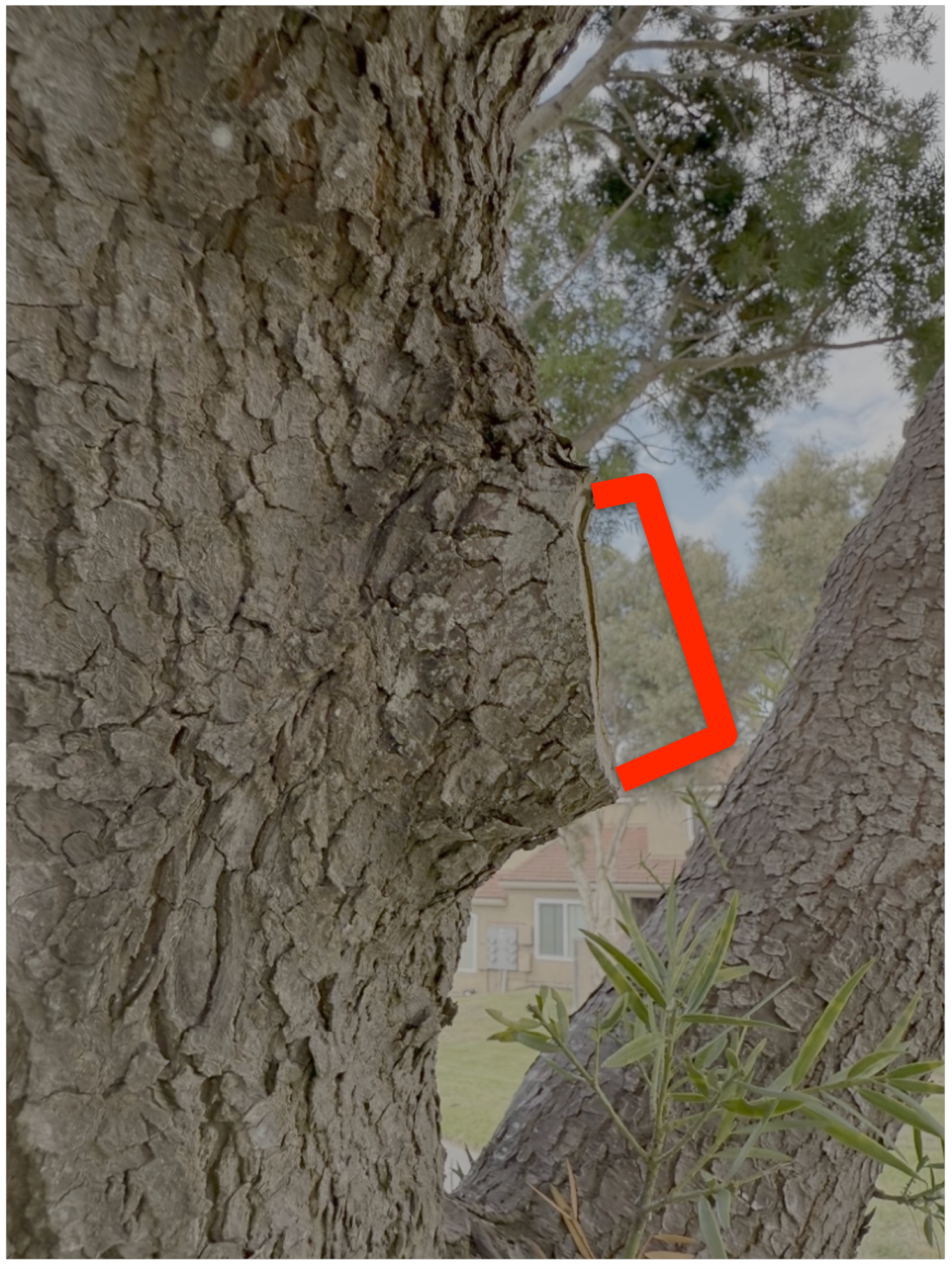
The red lines in the above photo show how much of the branch should’ve been retained, and how much of a stub should’ve been left on the trunk. Unfortunately, the pruning cut removed some of the collar and will limit normal biological response.
Branch collars prevent decay from entering the trunk. When the branch dies, or is pruned off, the trunk responds by closing off the union. The trunk needs all of the branch collar to close off the injury. And the function of the collar is ruined if it’s damaged. The photo below shows another example of where the collar was cut into, stunting the development of response wood.
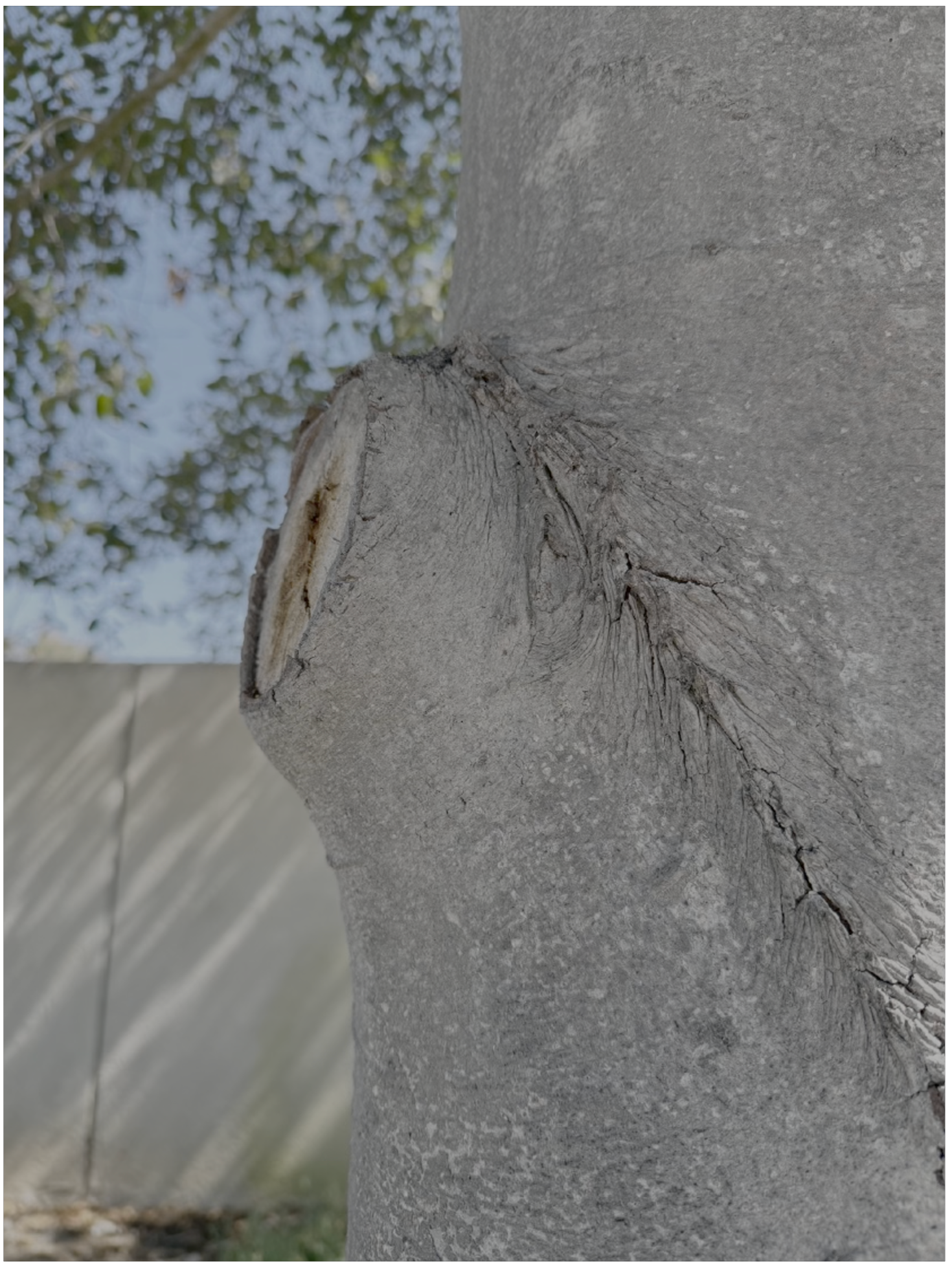
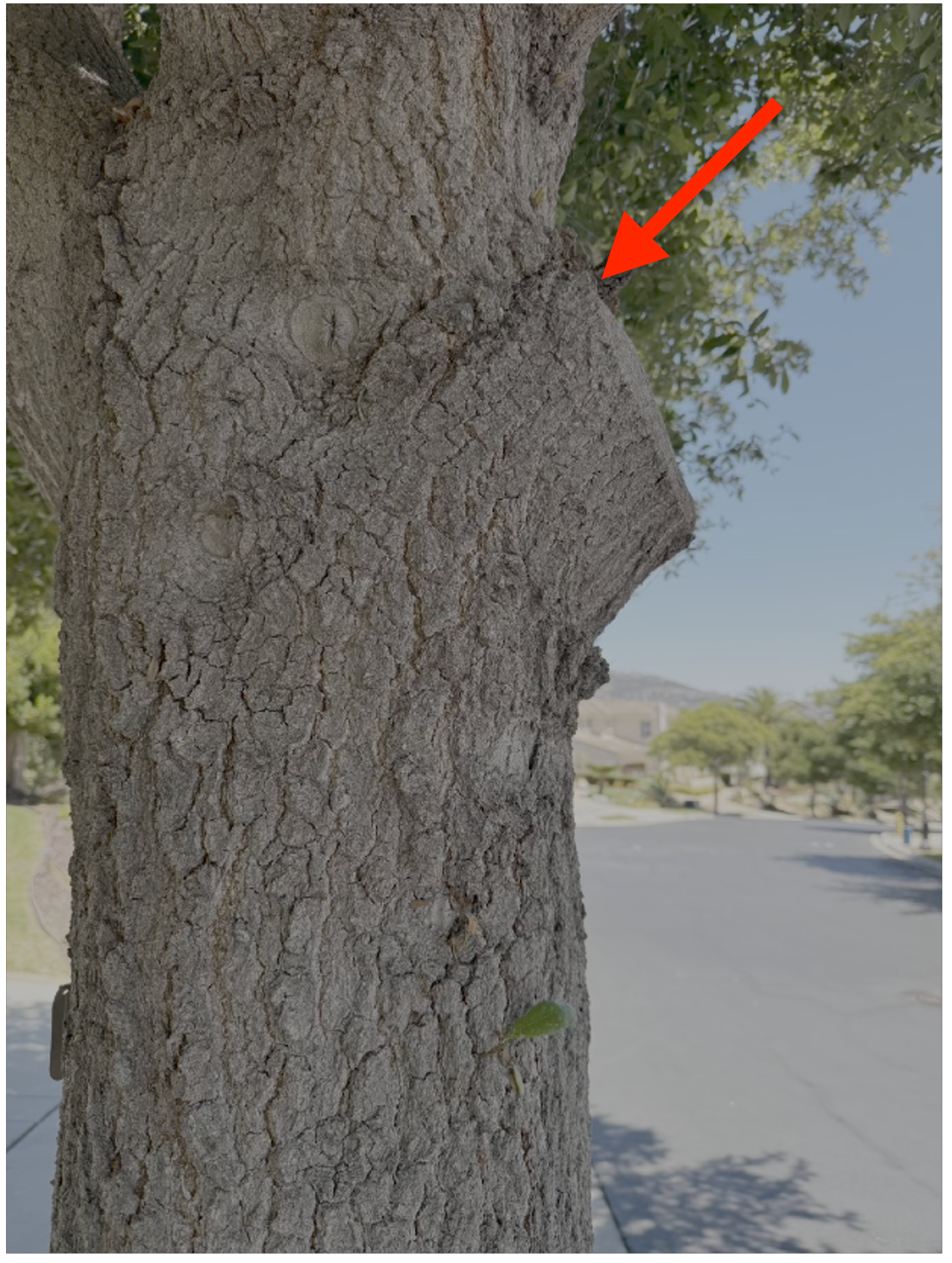
Since it is difficult to know exactly where the wood will be closed off, pruning cuts must be well outside the union to foster undisrupted function. Cuts must leave a “stub” to stay outside the collar. The top-side of the branch collar in the photo below (pointed at by red arrow) is not adding as much wood as the surrounding portions. The pruning cut that removed the branch damaged the top of the collar, which limited the collar’s ability to respond normally.
These ideas — leaving stubs, not damaging any portion of the branch collar, and avoiding flush cuts — are not new to the tree care industry of southern California. But it has taken years to make enough observations to expound on the topic.
One of my roles as a tree consultant is to help tree pruners obtain more knowledge. And this is because the goal of TreeLife is to help improve and enhance the urban forest everywhere.