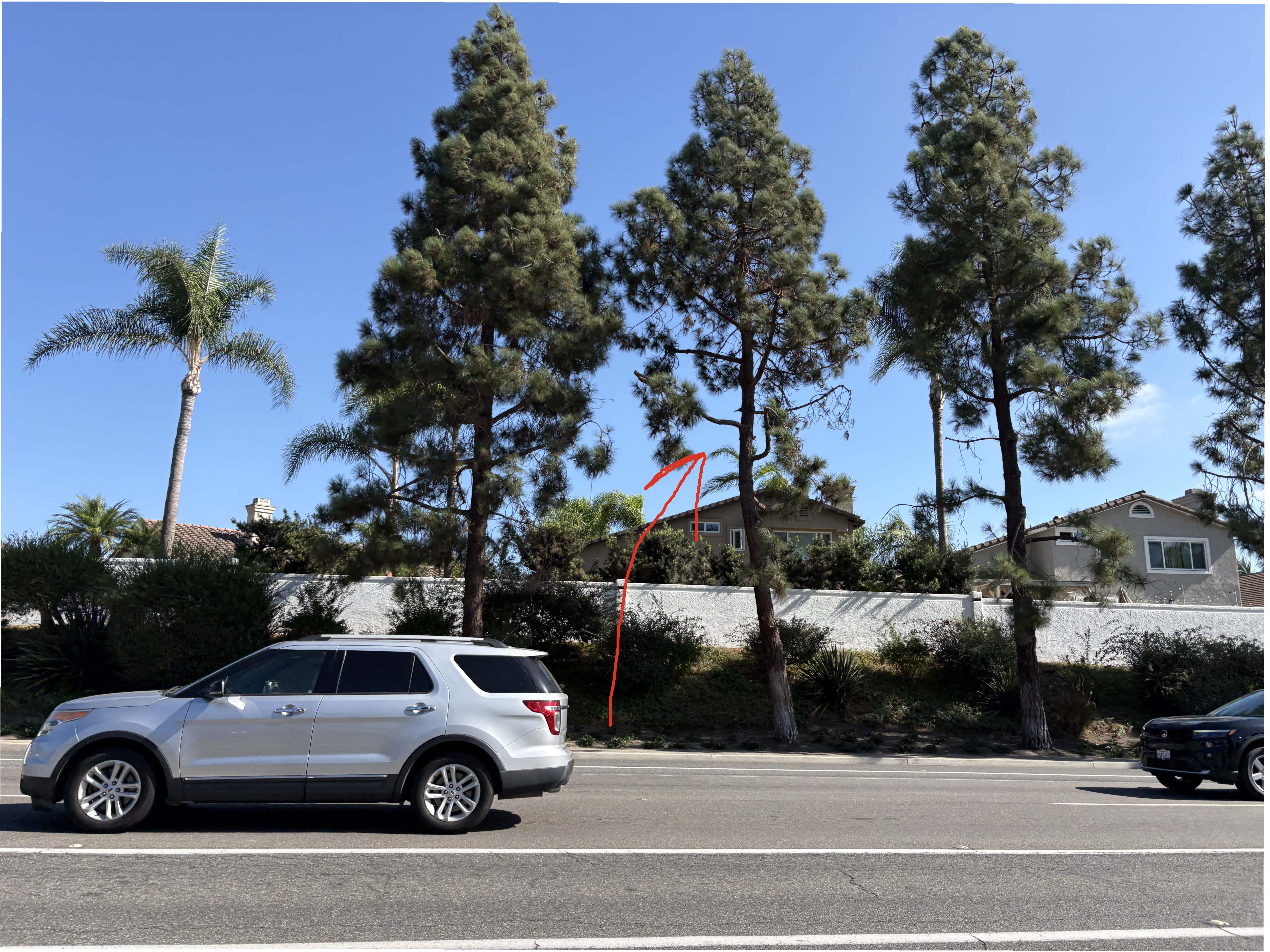
When the crowns of mature trees turn brown and their health appears to be rapidly declining, removal can seem like the only option. But before making that decision, it is important to understand what is causing the decline and whether the trees can recover.
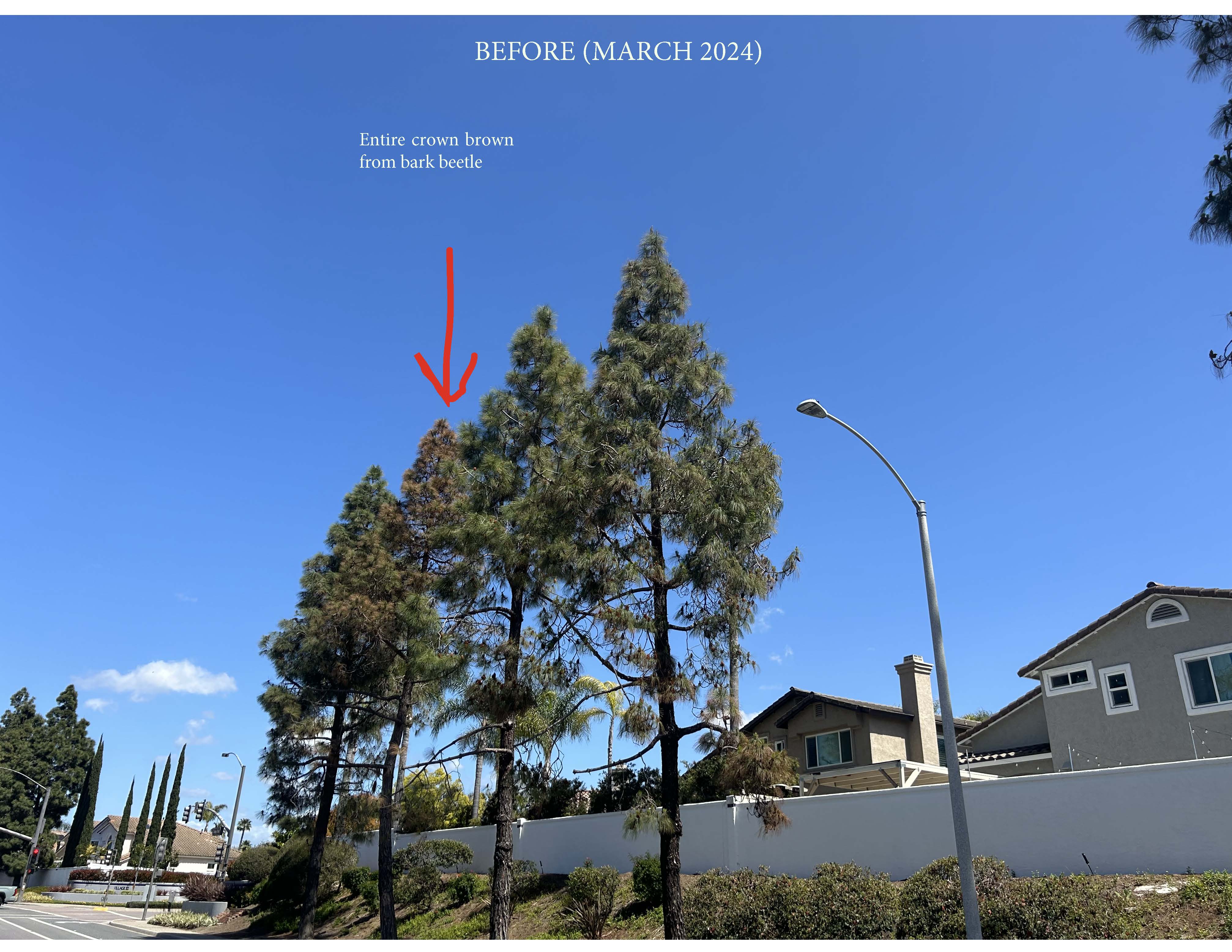
In North County San Diego, California, two Canary Island pines (Pinus canariensis) faced exactly this situation. Their crowns had become extensively brown following a bark beetle infestation, and removal was being considered.
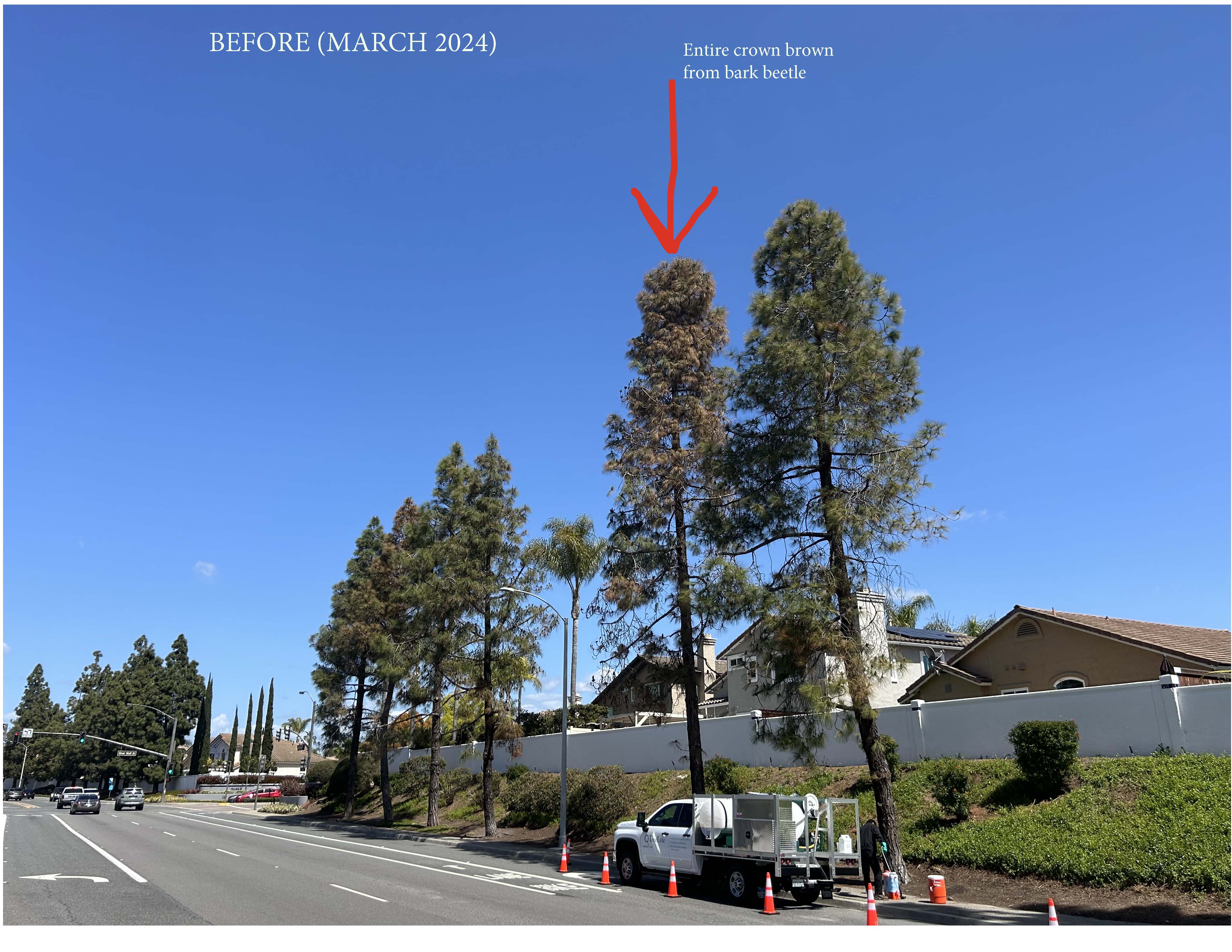
Rather than treating removal as the only solution, TreeLife evaluated the trees, identified evidence of bark beetle activity, and implemented targeted treatment and follow-up care. Over time, the trees recovered their green crowns and continued developing.
This case highlights an important principle in tree health care: a severely stressed tree may still have a path to recovery when the underlying problem is properly identified and addressed.
When Bark Beetles Threaten a Tree's Canopy
The Canary Island pines were experiencing extensive browning throughout their crowns. Most, if not all, of their needles had turned brown, creating the appearance of trees in severe decline.
The infestation followed a nearby ravine fire. Although the trees' crowns showed significant damage, a thorough assessment was needed to understand the cause and determine the appropriate course of action.
Bark beetles can be particularly concerning because their activity may not always be immediately apparent from a distance. Signs of infestation can include entry and exit holes in the bark, as well as changes in the appearance and color of the tree's crown.
In this case, TreeLife identified visible entry and exit holes and observed the widespread browning of the needles. These findings provided evidence of bark beetle activity and helped inform the treatment approach.
Assessing the Trees Before Considering Removal
When a tree's canopy is extensively brown, it can be tempting to assume that the tree is beyond recovery. However, canopy symptoms alone do not tell the full story.
A professional assessment helps identify the factors contributing to the decline and determine whether treatment may be appropriate.
For these Canary Island pines, TreeLife evaluated the visible symptoms and evidence of infestation before proceeding. The findings supported a targeted approach focused on addressing the bark beetles and supporting the trees' recovery.
This step is important because tree removal is a significant decision, especially when mature trees provide shade and other benefits to the surrounding community.
A Targeted Treatment and Recovery Plan
TreeLife treated the pines for bark beetles in late 2023. Treatment and follow-up care continued through 2024 as the trees moved through the recovery process.
Rather than relying on a one-time intervention, the approach involved allowing time for the trees to respond and monitoring their development.
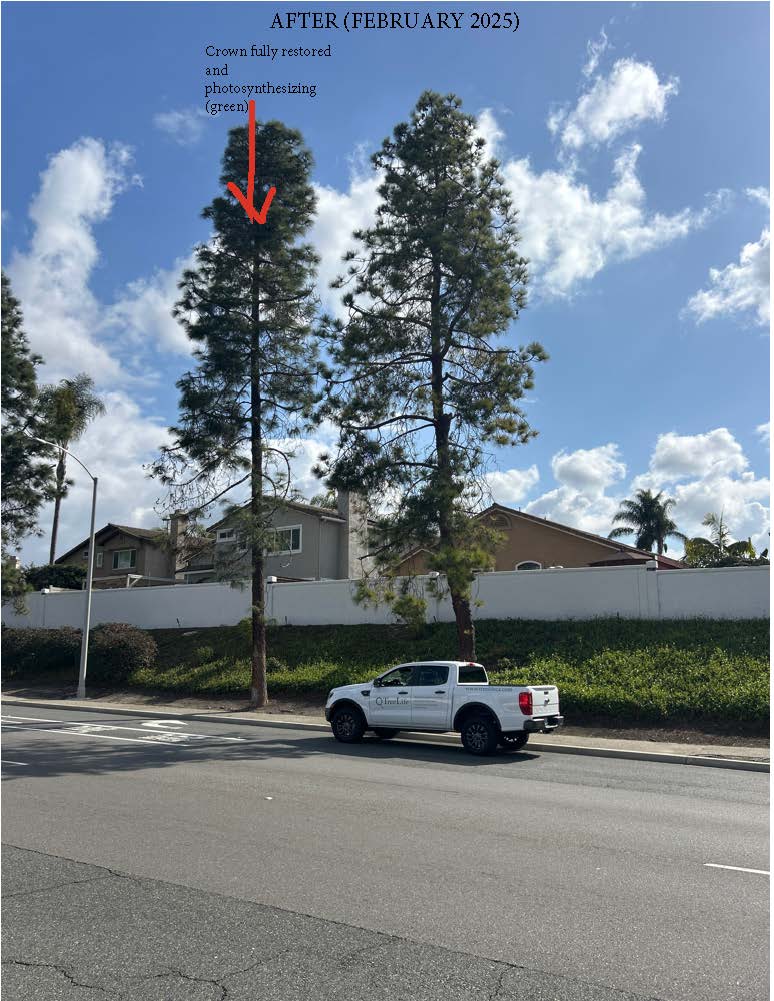
The recovery did not happen overnight. It took approximately six months to a year for the crowns to show full recovery.
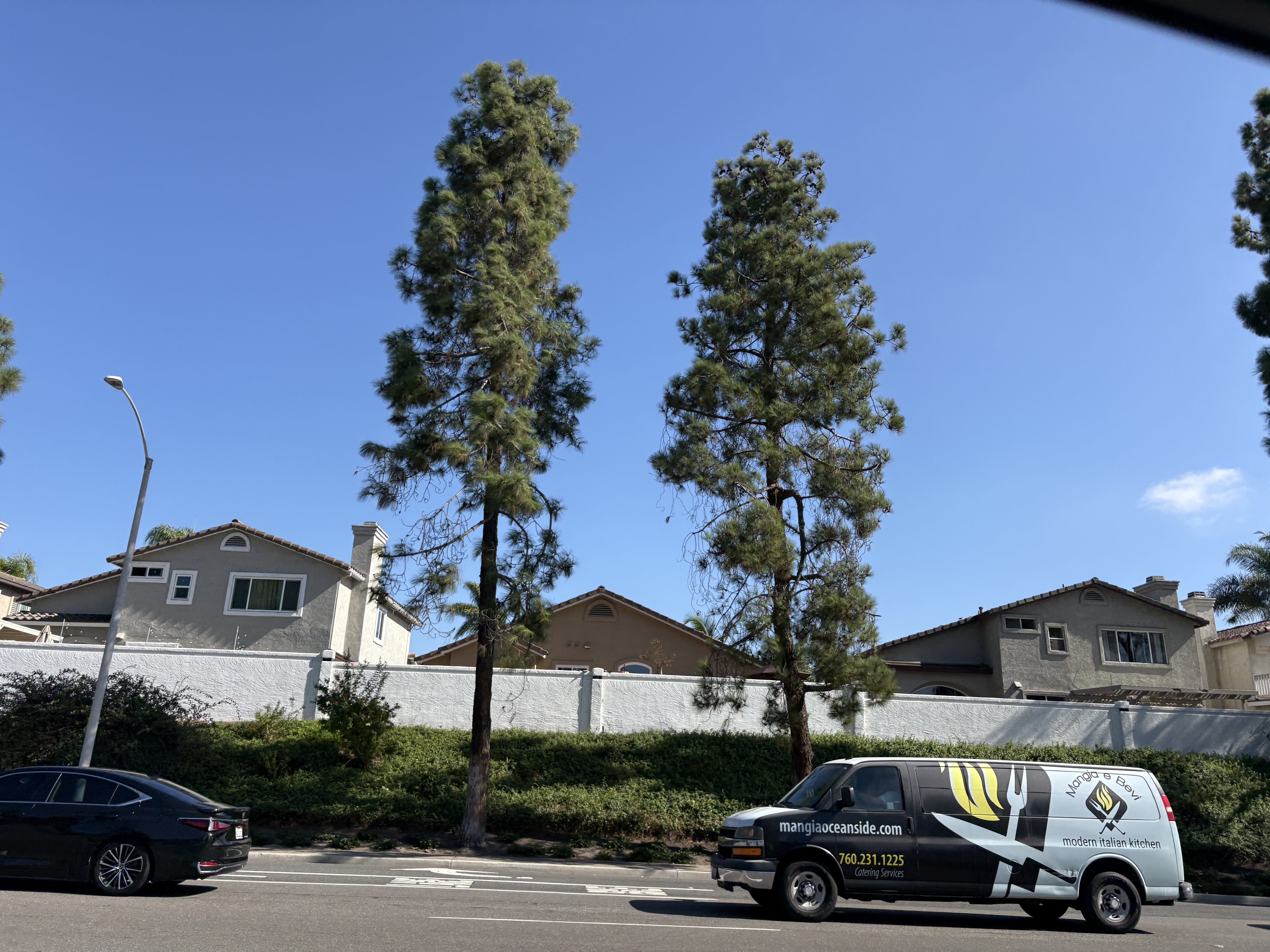
By fall 2026, the trees remained green, were developing properly, and showed no signs of renewed impact from the infestation. They continue to be monitored to help track their condition over time.
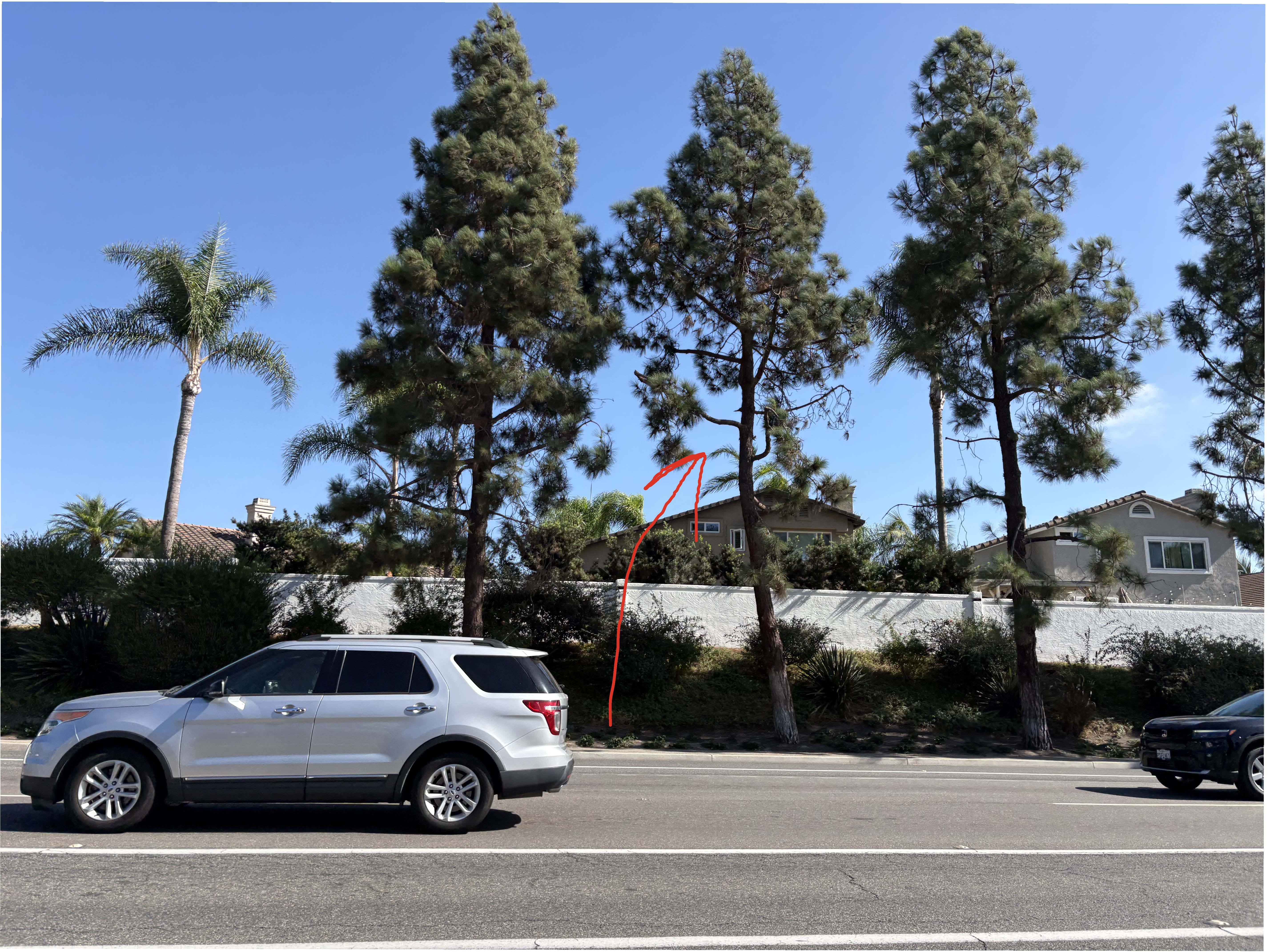
This outcome demonstrates the value of combining appropriate treatment with ongoing observation, particularly when working with mature trees that have experienced significant stress.
The Results: Trees That Continued to Provide Their Benefits
The Canary Island pines that had once been considered for removal recovered and continued to grow.
The outcome was meaningful not only for the trees themselves, but also for the surrounding urban forest.
Mature trees provide shade and contribute to the character and environmental benefits of a community. When a tree is removed, those benefits are lost, and replacing a mature tree does not immediately recreate what it provided.
In this case, TreeLife's treatment and monitoring helped preserve trees that might otherwise have been removed.
The pines stand as an example of how informed tree health care can create an alternative to removal when recovery is possible.
Why Tree Removal Should Not Always Be the First Option
Tree removal is sometimes necessary. However, it should not automatically be the first response to a tree experiencing severe symptoms.
A tree with a brown canopy may be affected by insects, disease, environmental stress, or a combination of factors. Understanding the cause is an important part of deciding what should happen next.
For mature trees in particular, evaluating the potential for recovery can help property owners and communities make more informed decisions.
A thoughtful assessment considers the tree's condition, the contributing factors, and the options available. When appropriate, treatment and monitoring may help preserve a tree and the benefits it provides.
Tree Health Assessment Services
Preventative Treatments: Why Timing and Purpose Matter
Another important lesson from this case is that tree care should be based on the specific needs of the tree—not simply on a routine schedule.
Preventative treatments are sometimes recommended annually, even when the same frequency may not be appropriate for every tree, pest, or condition.
Some treatments may need to be repeated annually until a defined threshold of control is reached. Others may not require the same schedule.
Applying treatments without considering their purpose, timing, and necessity can be counterproductive to long-term tree health and environmental stewardship.
TreeLife's Tree and Plant Healthcare services focus on specifying the appropriate treatment and applying it at the right time, based on the tree's condition and the underlying problem.
The goal is not simply to treat symptoms repeatedly. It is to develop actionable plans that address root causes, support long-term tree health, and help trees and the urban forest move toward self-sustenance.
Tree and Plant Healthcare Services
A Long-Term Approach to Tree Health
The recovery of these Canary Island pines reinforces the importance of looking beyond immediate symptoms.
Effective tree health care may involve:
- Identifying the pest, disease, or environmental factor contributing to decline.
- Selecting treatment based on the specific condition and needs of the tree.
- Applying treatment at the appropriate time.
- Monitoring the tree's response and development.
- Adjusting the care plan when new information or symptoms emerge.
This approach helps ensure that tree care is based on diagnosis and follow-up rather than assumptions or unnecessary recurring treatments.
A Case for Preserving the Urban Forest
The Canary Island pines in North County San Diego were severely affected by bark beetles, with extensive browning throughout their crowns. Removal was being considered.
Through assessment, targeted treatment, and continued monitoring, TreeLife helped the trees recover. By fall 2026, their crowns were green, their development was progressing properly, and they remained unaffected by the previous infestation.
Their recovery illustrates why evaluating a tree's condition before deciding to remove it matters.
When mature trees can be preserved, communities retain the shade and other benefits they provide. And when tree care is guided by the right diagnosis, appropriate treatment, and long-term planning, the result can be more than short-term improvement—it can be a healthier, more sustainable urban forest.
Can Your Tree Recover from a Pest Infestation?
If a tree on your property is showing signs of decline, browning, or possible insect activity, a professional assessment can help identify what is happening and determine what options may be available.
TreeLife provides tree assessment and tree health care services throughout Southern California, helping property owners make informed decisions about their trees.
Related Services
- Tree Assessment Services
- Tree Health Care Services
- Tree Pest Control Services
- Tree Health Monitoring
- Tree and Plant Healthcare Services
Frequently Asked Questions About Bark Beetle Treatment and Tree Recovery
Can a tree recover from a bark beetle infestation?
Recovery depends on the tree's condition, the extent of the infestation, and other contributing factors. A professional assessment can help determine whether treatment and monitoring may be appropriate.
Does a brown tree canopy always mean the tree needs to be removed?
No. Extensive browning is a sign that a tree is experiencing stress or damage, but it does not automatically determine whether removal is necessary. Identifying the cause and assessing the tree's condition are important steps before making a decision.
How long can it take for a tree to recover after bark beetle treatment?
Recovery timelines vary depending on the tree and the severity of the problem. In the Canary Island pine case described here, the crowns took approximately six months to a year to fully recover.
Should bark beetle treatments be applied every year?
Not necessarily. Treatment frequency depends on the specific pest, the treatment being used, and the level of control required. Some situations may call for annual treatment until a defined threshold is reached, while others may not require the same schedule.
Why is monitoring important after tree treatment?
Monitoring helps track the tree's response, identify any renewed symptoms, and determine whether additional action is needed. It supports informed decisions about the tree's ongoing care.
What should I do if my pine tree is turning brown?
A professional tree assessment can help identify whether the browning is associated with bark beetles, another pest, disease, environmental stress, or a combination of factors. The appropriate next step depends on the findings.