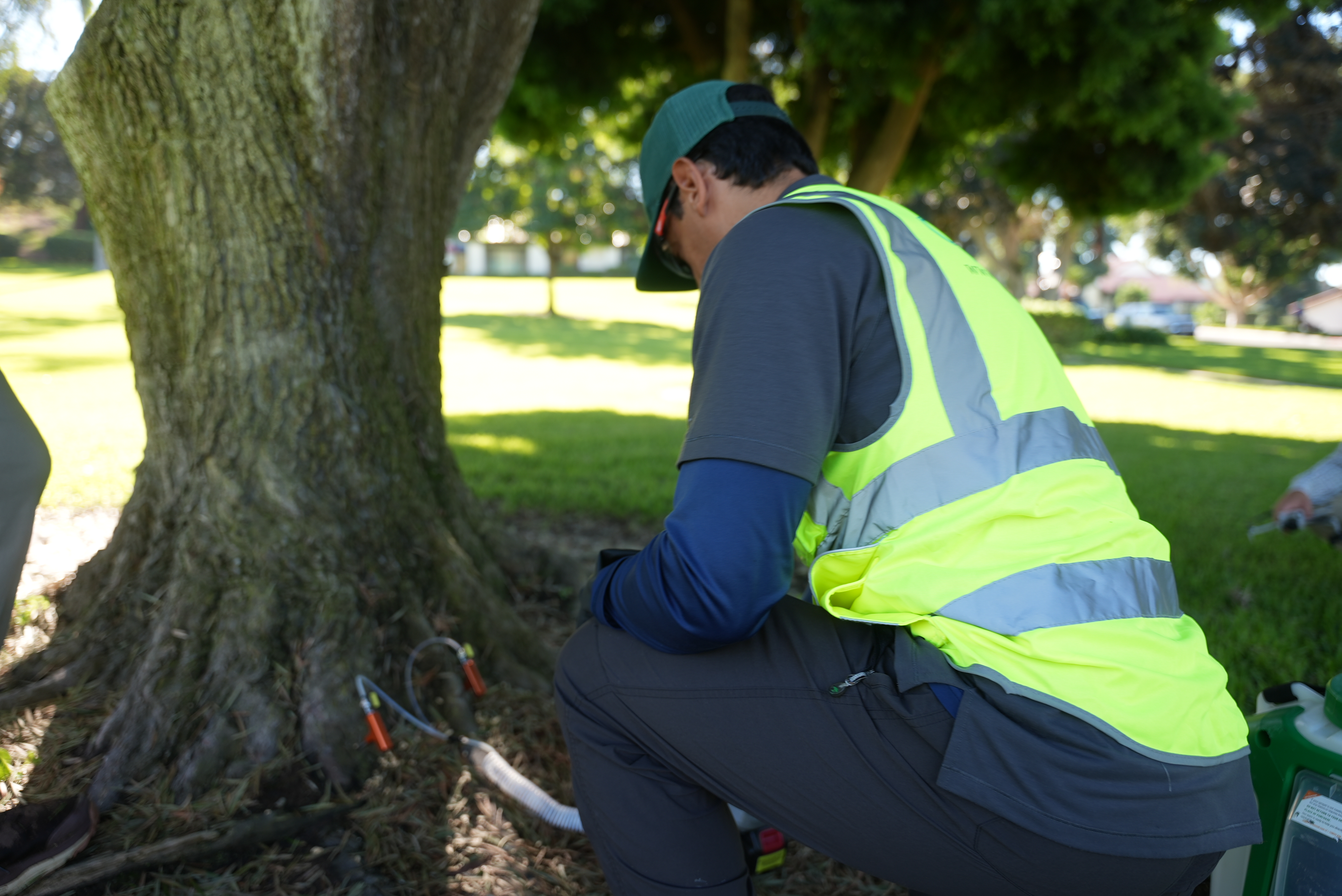
Tree Health Care: What Does a Healthy Tree Actually Need?
Healthy trees do more than improve the appearance of a property. They provide shade, support the surrounding landscape, and contribute to a healthier urban environment. But trees do not stay healthy simply because they are established. They need the right combination of water, soil conditions, nutrients, structural care, and protection from pests and disease.
Professional tree health care focuses on understanding what a tree needs and addressing problems before they become serious.
At TreeLife CA, our certified arborists develop customized strategies designed to improve tree health, longevity, safety, and resilience throughout San Diego County and Southern California.
What Does a Healthy Tree Need?
A healthy tree depends on several interconnected factors. Providing only one type of care may not solve an underlying problem.
Important components of effective tree health care include:
- Proper irrigation
- Healthy soil
- Adequate nutrients
- Healthy root development
- Appropriate pruning
- Pest monitoring
- Disease prevention
- Protection from environmental stress
Because these factors influence one another, professional tree care should consider the entire tree and its growing environment rather than focusing only on visible symptoms.
Proper Watering Is Essential for Tree Health
Water stress can have significant consequences for trees, particularly during periods of heat and drought.
Inadequate water can contribute to physiological stress, root desiccation, reduced photosynthesis, and other problems that weaken a tree over time. TreeLife's deep-root watering materials specifically identify heat and water stress as potential causes of interconnected biological problems, including root desiccation and increased vulnerability to secondary disorders and pests.
However, more water is not always better.
Trees need appropriate irrigation based on species, soil conditions, root zones, and environmental factors.
Healthy Soil Supports Healthy Roots
Tree roots depend on suitable soil conditions for water, oxygen, and nutrient availability.
Urban landscapes can create challenging conditions for roots, including:
- Soil compaction
- Limited root space
- Poor drainage
- Inadequate soil quality
- Construction disturbance
- Improper irrigation
TreeLife's cultural modification approach focuses on improving environmental conditions that affect tree health, including soil quality, irrigation, and available root space.
Improving the root environment can therefore be an important part of long-term tree health management.
Trees Need the Right Nutrients
Trees require nutrients for normal growth and development, but nutrient problems are not always obvious.
Urban trees can experience nutrient limitations because of soil conditions and environmental stress. Signs that may indicate a potential nutrient issue include:
- Yellowing leaves
- Slow growth
- Weak canopy development
- Reduced overall vitality
TreeLife's nutrient management process can include soil analysis, nutrient diagnosis, customized fertilization, and monitoring.
A professional evaluation can help determine whether nutrient management is actually needed before applying treatments.
Tree Nutrient Management Services
Proper Pruning Helps Maintain Tree Health
Pruning is not simply about making a tree look better.
When performed correctly, pruning can support appropriate structure, improve clearance, and address specific tree conditions. However, unnecessary or improper pruning can create additional stress and damage.
Professional arborists consider the tree's species, condition, structure, and objectives before recommending pruning.
For long-term tree health, pruning should be part of a broader management strategy rather than an isolated maintenance task.
Pest and Disease Management
Healthy trees can still experience pest and disease problems.
Early identification is important because visible symptoms may not always reveal the underlying cause. TreeLife's pest management process includes inspection, pest identification, severity analysis, targeted treatment, and monitoring.
Similarly, tree disease diagnosis may involve visual inspection, testing, and professional analysis before developing a treatment strategy.
This is why treating a symptom without understanding its underlying cause may not resolve the problem.
How Environmental Stress Affects Tree Health
Trees growing in urban environments can experience multiple forms of stress at the same time.
Heat, drought, poor soil conditions, limited root space, pests, disease, and improper irrigation can interact and gradually reduce tree vitality.
A tree health care strategy should therefore look beyond individual symptoms and consider the conditions surrounding the tree.
This is where a tree health assessment can be valuable.
A professional assessment evaluates the tree's health, structure, and potential risks and can help identify appropriate management recommendations.
Tree Health Assessment Services
Signs Your Tree May Need Professional Tree Health Care
Consider scheduling a professional evaluation if you notice:
- Persistent leaf discoloration
- Premature leaf loss
- Reduced or abnormal growth
- Dead branches
- Canopy thinning
- Signs of pests
- Fungal growth
- Repeated drought stress
- Changes in soil or root conditions
These symptoms do not necessarily indicate one specific problem. Several different conditions can produce similar symptoms, which is why professional diagnosis can be important.
Why Preventative Tree Health Care Matters
Waiting until a tree shows severe decline can make management more difficult.
Preventative tree health care allows property owners to identify environmental stress, nutrient limitations, pest activity, disease concerns, and structural issues earlier.
TreeLife's approach combines services such as cultural modification, nutrient management, pest control, and disease treatment to support long-term tree health.
The goal is not simply to respond when a tree becomes unhealthy. It is to create conditions that help trees remain healthy and resilient.
Give Your Trees the Care They Need
Healthy trees require more than occasional watering or trimming.
They need an environment that supports healthy roots, adequate nutrition, appropriate irrigation, structural development, and protection from pests and disease.
If your trees are showing signs of stress or you want to develop a proactive tree health management strategy, TreeLife CA can help.
Our certified arborists provide professional tree health care services throughout San Diego County and Southern California.
Related Services
- Tree Health Care Services
- Tree Health Assessment Services
- Cultural Modification Plans
- Tree Nutrient Management
- Tree Pest Control
- Tree Disease Treatment
Request a Professional Tree Health Assessment
Not sure what your trees need?
A professional assessment can help identify potential health concerns and determine which management strategies are appropriate for your property.
Frequently Asked Questions About Tree Health Care
What does tree health care include?
Tree health care can include irrigation management, soil improvement, nutrient management, pruning recommendations, pest control, disease treatment, and other strategies designed to support long-term tree health.
How do I know if my tree is healthy?
Healthy trees generally show appropriate growth, healthy foliage, and good structural condition. However, some problems may develop before visible symptoms appear. A professional tree health assessment can provide a more complete evaluation.
How often should trees receive professional care?
The appropriate schedule depends on the tree species, site conditions, age, health, and environmental stressors. Proactive assessments can help determine an appropriate management schedule.
Can watering improve tree health?
Proper irrigation is an important component of tree health care. However, irrigation should be appropriate for the tree and its growing conditions. Both inadequate and improper watering can contribute to tree stress.
When should I contact a certified arborist?
Contact a certified arborist when you notice declining growth, canopy thinning, leaf discoloration, dead branches, pest activity, disease symptoms, or other changes in tree condition. A professional assessment can help identify the underlying issue and determine the appropriate next steps.